A Saudi Arabian military delegation recently visited two training camps in the city of Gorisil, located within the Galgaduud region, to inspect forces belonging to the Somali Federal Government. According to reports from local media outlet Caasimada, this visit marks the operational phase of a Saudi-funded security program designed to train new units slated for integration into the Somali National Army. The initiative underscores Riyadh’s growing involvement in the security architecture of the Horn of Africa, following recent bilateral discussions aimed at stabilizing the region.
Available details indicate that the program encompasses the training of 5,107 soldiers distributed across the two inspected installations. Approximately 2,000 of these recruits are young men reportedly drawn from the semi-autonomous Puntland region, while the remaining personnel were gathered from various other federal member states. The comprehensive training curriculum is scheduled to span nine months, focusing on equipping the forces with foundational military skills, standardized operational procedures, and specialized combat training.
The instructional framework relies on an international cohort of military instructors, with personnel drawn from Romania, Ukraine, South Africa, and Colombia. Despite the scale of the deployment, the Somali Federal Government has not yet released granular details regarding the specific selection criteria for the trainees or the exact nature of the tactical curriculum. Observers note that the diverse background of the instructors reflects a trend of outsourcing specialized military training to private or international experts in complex conflict environments.
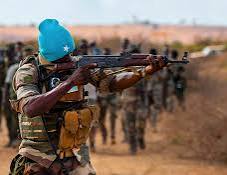
This development follows the formal signing of a comprehensive defense and military cooperation agreement between Somalia and Saudi Arabia on February 9, 2026, in Riyadh. Signed by Somali Defense Minister Ahmed Moalim Fiqi and Saudi Defense Minister Prince Khalid bin Salman, the pact aims to strengthen bilateral defense relations, harmonize troop training, and foster mutual strategic interests. The Gorisil training initiative represents one of the primary visible steps in implementing this accord, as Saudi Arabia seeks to expand its strategic footprint in the Red Sea and Gulf of Aden corridors.
The implementation of the Saudi program adds to an already crowded security assistance landscape in Somalia, which has previously concluded military agreements with Turkey, the United States, the United Arab Emirates, Egypt, Eritrea, and Uganda. While these international partnerships have successfully trained various specialized units of the Somali security apparatus, regional analysts frequently raise concerns regarding the historical lack of coordination between disparate programs. The variance in training methodologies, tactical doctrines, and institutional affiliations often complicates the long-term integration of these forces under a unified national command.
Furthermore, the expansion of Saudi military support occurs amid intensifying geopolitical competition for influence across the strategic coastline of Somalia. The recruitment of substantial numbers of personnel from Puntland has drawn particular scrutiny from political observers, given the protracted governance and electoral disputes between the Puntland administration and the federal government in Mogadishu. With no official statement yet issued by Puntland authorities, it remains unclear whether these forces were coordinated directly with regional leaders or how their subsequent deployment will impact federal-provincial power dynamics.