Recent high-level coordination efforts by the United Arab Emirates (UAE) to fortify regional supply chains are resonating beyond the Gulf, offering a signal of stability for African economies. For nations like Ethiopia, which rely heavily on Gulf-linked maritime and multimodal routes, the UAE’s focus on trade continuity serves as a vital pillar for import reliability and the movement of essential goods across the Horn of Africa.
The strategic importance of this coordination was underscored during a meeting chaired by His Excellency Dr. Thani bin Ahmed Al Zeyoudi, UAE Minister of Foreign Trade. Hosted by the Ports, Customs and Free Zone Corporation (PCFC) in Dubai, the session convened senior shipping executives and maritime leaders. The primary objective was to address contemporary logistical hurdles and ensure that regional trade remains resilient despite global economic shifts and operational complexities.
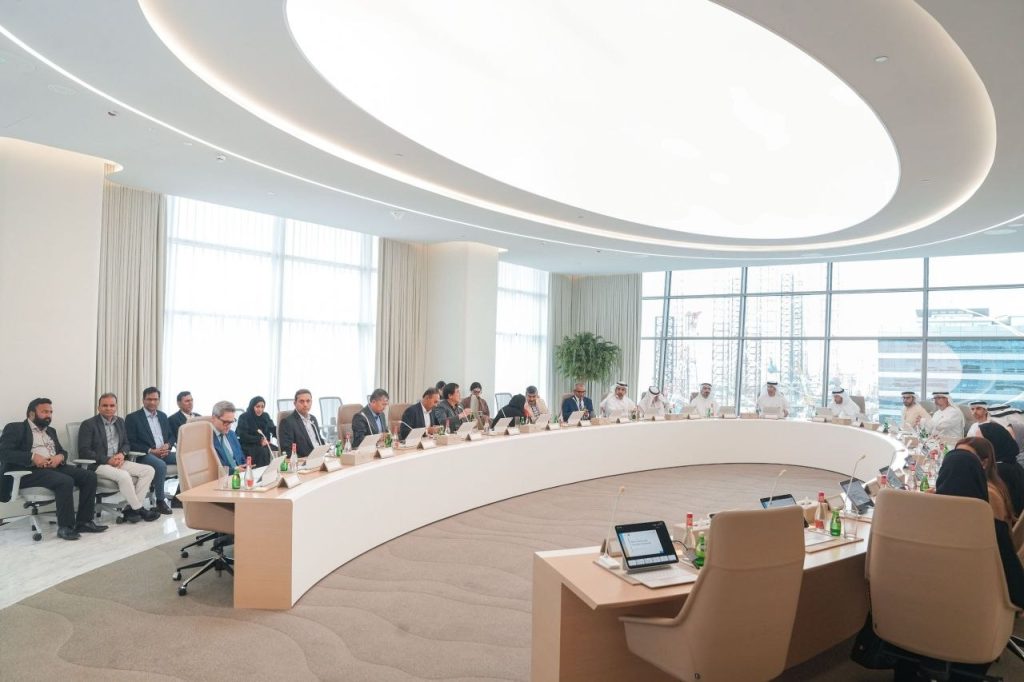
Dr. Al Zeyoudi emphasized the UAE’s commitment to “safeguarding the continuity of trade flows” through forward-looking solutions. He noted that enhancing the agility of supply chains is essential for the uninterrupted movement of strategic commodities.
These efforts include the optimization of alternative trade corridors and the implementation of advanced customs frameworks designed to bolster the UAE’s standing as a dependable global logistics hub.
For Ethiopia, the timing of these initiatives is particularly relevant. The Ethiopia–UAE partnership has matured into a robust economic alliance, highlighted by a $3 billion concessional loan and a 2024 currency swap agreement between their respective central banks. With over 113 active UAE investment projects in Ethiopia valued at $2.9 billion, the stability of the maritime routes managed by the UAE directly impacts Ethiopia’s broader economic transformation and food security.
Operational improvements discussed during the meeting focused on diversifying transit options. His Excellency Abdulla bin Damithan, Chairman of the PCFC, highlighted the increased efficiency of alternative corridors, such as the Fujairah and Khorfakkan ports.
By strengthening regional maritime connectivity, the UAE aims to mitigate the impact of rising operational costs and ensure seamless cargo movement for landlocked partners dependent on these coastal gateways.
Technological and administrative innovations also took center stage. Dr. Abdulla Busenad, Director General of Dubai Customs, outlined several “high-impact initiatives,” including the activation of an Advance Cargo Information (ACI) system and the expansion of “green corridors” to neighboring states like Oman and Saudi Arabia.
These measures are designed to reduce transit times and simplify the clearance process for cargo destined for international markets, including those in East Africa.
Ultimately, the meeting reinforced a shared vision of public-private synergy to navigate current maritime challenges. By integrating land, rail, and sea solutions, the UAE is positioning its logistics infrastructure as a shield against global volatility. For corridor-dependent African markets, these administrative and physical infrastructure upgrades represent more than just local improvements; they provide a necessary foundation for long-term trade sustainability.