The critical role of ecological farming in addressing climate change and food insecurity took center stage yesterday as Ethiopia convened its Third National Agroecology Conference at the Ministry of Agriculture Conference Center. Organized by “PELUM Ethiopia” in collaboration with civil society groups and development partners, the high-level forum brought together researchers, policymakers, and farming communities under the theme “Agroecology for Environmental Health, Sustainable Food Systems and Climate Resilience.”
The opening session highlighted the urgent need to integrate ecological principles into mainstream national agricultural policies. Speakers, including “Dr. Negusu Legesse” (Christian Aid and Relief Development Association, CCRDA), “Dr. Hailu Araya” (PELUM Ethiopia), “Dr. Mitiku Aklilu”, and agricultural researcher “Dr. Regassa Feyisa”, emphasized that scaling up agroecological practices is essential for restoring degraded soils, preserving indigenous biodiversity, and safeguarding smallholder farmers against extreme weather shocks.
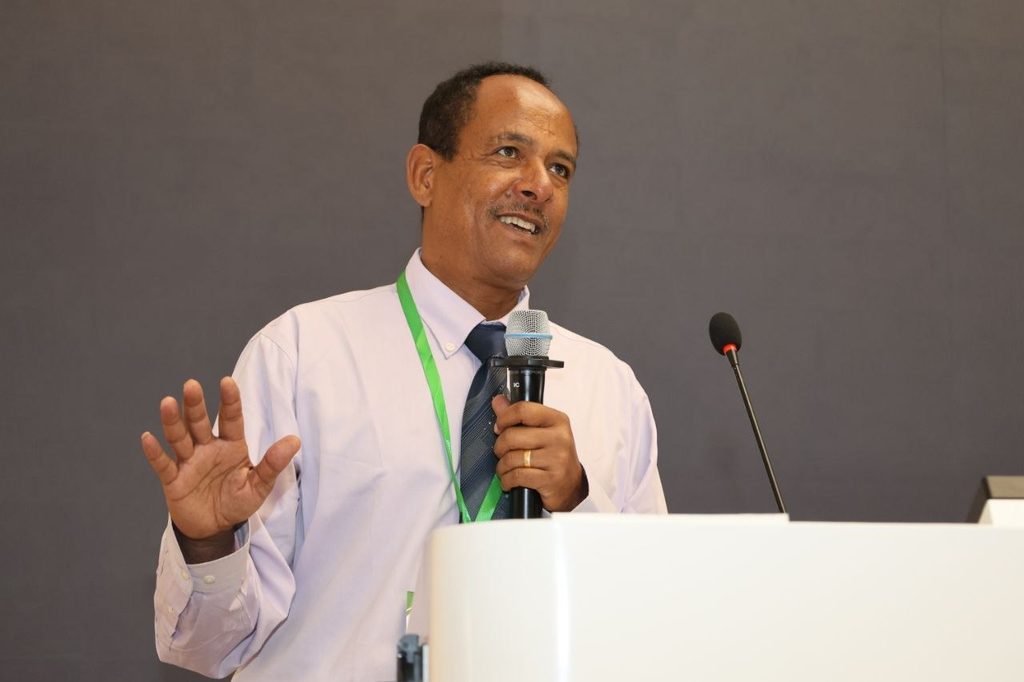
Dr. Hailu Araya
A core feature of the day-long event was an interactive exhibition showcasing indigenous seeds, innovative local farming tools, and diverse traditional foods prepared by rural communities. Attendees explored various farmer-led adaptation techniques designed to reduce chemical fertilizer dependency while boosting crop resilience. Organizers noted that promoting such home-grown solutions empowers local producers to maintain control over their agricultural heritage and food sovereignty.
To honor exceptional contributions to the sector, the conference concluded with a special recognition and certification program. Awards were presented to pioneering farmers, researchers, and institutions that have demonstrated outstanding commitment to seed conservation, biodiversity development, and the advancement of sustainable farming methods across different regions of the country.
The successful execution of the national forum was backed by technical and financial contributions from multiple key stakeholders, including the “Ethiopian Biodiversity Institute (EBI)”, the “Agroecology Fund”, “Brot für die Welt”, “ActionAid”, and “CST Ethiopia”. Stakeholders agreed that continued multi-sectoral collaboration remains vital for translating conference recommendations into practical, nationwide implementations.