By Awel Abera Mekonen (Journalist)
The fresh air, the shade of trees and the sound of flowing water offer a brief escape from the noise and rush of Addis Ababa. I am walking along the banks of the Kebena River. Around me, trees provide a green canopy, birds move above the water, and residents gather to enjoy the open space.
Some people stroll across bridges spanning the river. Others sit in the landscaped areas, talking and relaxing, while children play nearby. Birds dip towards the water, seemingly searching for food.
The scene presents a striking contrast with the river’s troubled past. The newly developed riverside has given residents a place to reconnect with nature and enjoy public space. Yet the transformation raises a question that cannot be answered by appearances alone: Has the Kebena River truly recovered, or has its surrounding landscape simply been transformed?
Kassahun Mengistu, whom I meet enjoying the riverside with his child, welcomes the changes.
“I am happy to see Kebena looking restored. As you can see, my child is playing here with other children. In the past, it was difficult even to walk near the river because of the terrible smell, let alone allow children to play here. The river had become a source of danger rather than a gift of nature,” he says.
His experience illustrates how the transformation has affected everyday life in the surrounding community. A river is more than a recreational destination; it is also part of the relationship between residents, public health and the natural environment.
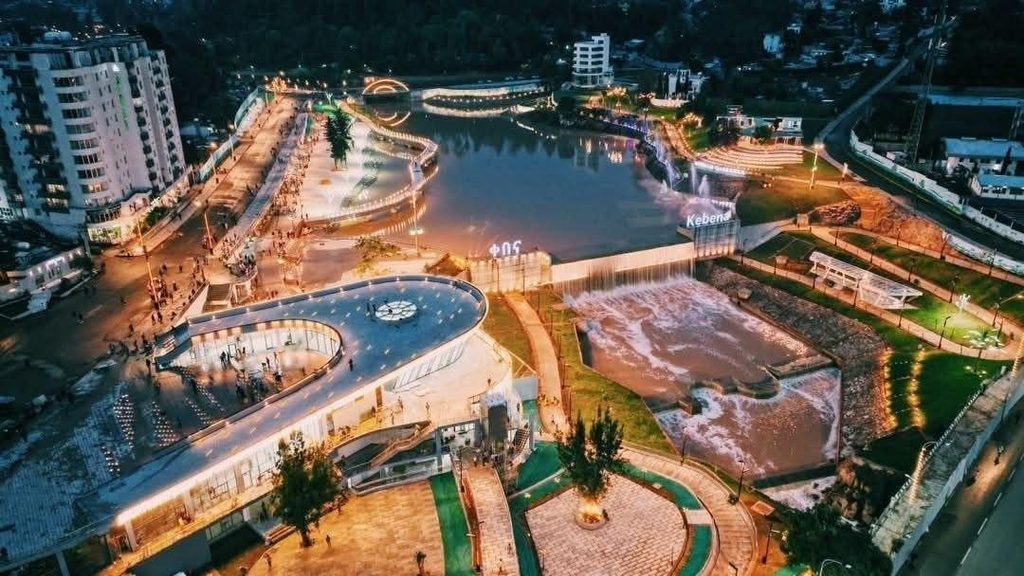
photo credit:ENA
From childhood memories to a symbol of pollution
Originating in the Entoto highlands, the Kebena River flows through Addis Ababa. For generations, it formed part of the social and natural life of communities along its banks. Residents recall a time when people gathered beside the river, swam in its waters and caught fish.
Kedus, who was born and raised in the area, remembers spending time near the river with his friends. He also attended Kokebe Tsibah Secondary School, located near the river’s upper reaches.
“I could not swim myself, but I enjoyed watching my friends swim. Over time, however, waste began flowing into the river and it became polluted. Today, the area has changed and has become a more welcoming place for recreation,” he recalls.
His memories reflect a wider urban challenge: as Addis Ababa expanded, the river increasingly came under pressure from inadequate waste management and the discharge of wastewater.
For years, liquid waste from residential and commercial premises, solid waste dumped into the river and the pressures associated with rapid urban growth contributed to the deterioration of its ecosystem. The damage extended beyond the visible pollution of the water, affecting the living organisms and habitats that depend on the river.
Kebena’s problems are not unique. Rivers and streams across Addis Ababa have faced similar pressures linked to urban expansion, pollution and the degradation of natural habitats.
The scientific warning: River health goes beyond appearance
The health of a river cannot be assessed simply by looking at how clear its water appears. Aquatic organisms, water chemistry and the physical condition of river habitats all provide important evidence about the state of an ecosystem.
A study published on ScienceDirect by Abebe Beyene and colleagues examined the effects of urban and industrial pollution on three rivers in Addis Ababa: Kebena, Big Akaki and Little Akaki.
The researchers used diatoms—microscopic algae—and aquatic macroinvertebrates to assess the ecological condition of the rivers. These organisms are useful indicators because their presence, absence and diversity can reveal how aquatic ecosystems respond to pollution and environmental changes.
The study found that all three rivers were experiencing substantial ecological stress. Among the major pressures identified were the degradation of natural habitats, pollution from identifiable discharge points and pollution originating from multiple, dispersed sources.
The findings underline an important distinction: removing visible rubbish from a river does not necessarily restore its ecological health. Recovery requires improvements in water quality, the restoration of natural habitats and the return of the organisms that sustain the river’s ecological balance.

An 87.6-hectare transformation: A new chapter for Kebena
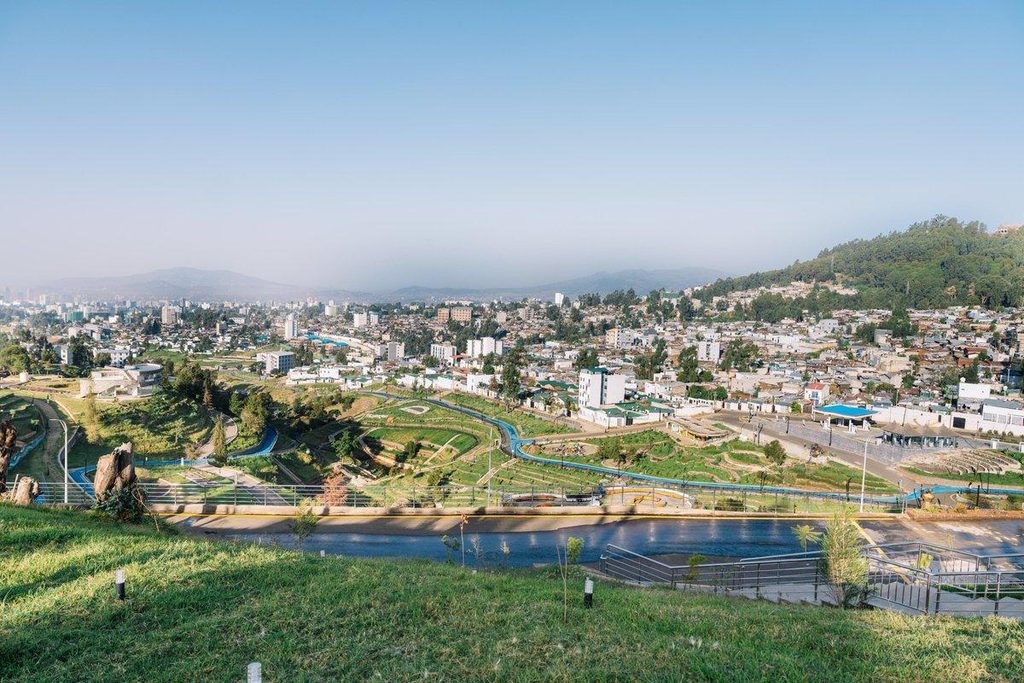
The Kebena River and riverside development project is part of Addis Ababa’s broader effort to reshape urban spaces while incorporating environmental considerations.
Prime Minister Abiy Ahmed officially inaugurated the Entoto–Kebena River and Riverside Development Project on Sene 21, 2018 E.C. The project covers 87.6 hectares and extends along a 10.5-kilometre river corridor.
Its components include infrastructure intended to reduce flood risks, modern bridges and green public spaces designed for community use. Together, these interventions aim to reconnect the river with the everyday life of the city.
Walelign Desalegn, a technical adviser on riverside development for the Addis Ababa City Administration, explains that the city’s rivers have increasingly lost their natural functions as urban growth has intensified.
In many places, he says, rivers have effectively become channels for wastewater disposal.
“Urban development must be compatible with nature. Rivers should not be threats to the city; they should be assets for the city,” he says.
According to Walelign, measures undertaken around the Kebena River include the installation of wastewater diversion pipelines to prevent direct discharges into the river, the reinforcement of riverbanks and the expansion of green cover.
These interventions are intended to help protect the river corridor from erosion and sediment pressure while improving the surrounding habitat.
However, infrastructure and landscaping represent only part of the restoration challenge. Whether these interventions translate into long-term ecological recovery remains a separate question.
Restoring biodiversity: More than planting trees
The central environmental question surrounding Kebena is not simply how green its banks have become. It is whether the plants, birds and aquatic organisms that once formed part of the river ecosystem are returning.
Dr Abiyot Birhanu, Deputy Director-General of the Ethiopian Biodiversity Institute, has lived near Kebena for more than two decades and has observed changes in the river over the years.
He welcomes the transformation, particularly the improvement in the appearance of an area once associated with foul smells and accumulated waste.
His perspective is also shaped by experiences in Germany. During work-related visits to the country, he observed river management and conservation practices in the city of Bonn—experiences that encouraged him to imagine similar environmental improvements in Ethiopia.
“What is happening around the Kebena River in Addis Ababa reminds me of the encouraging environmental conservation practices I observed in Bonn. It makes me feel that we are beginning to put similar experiences into practice in our own country,” he says.
Dr Abiyot emphasises the importance of planting indigenous trees and other vegetation along the river corridor. Such vegetation can help improve habitats and support biodiversity. But he cautions that planting trees alone is not enough to restore the ecosystem that existed in the past.
He recalls that indigenous species such as kosso, zigba, YeHabesha tid and tikur inchet were once part of the area’s vegetation. Their decline, he explains, affected the natural balance and had consequences for birds and other organisms that depend on these habitats.
Biodiversity is interconnected. When plant species decline, birds and other wildlife can lose sources of food and shelter. Birds, in turn, contribute to seed dispersal and the natural regeneration of vegetation.
For this reason, Dr Abiyot argues that biodiversity conservation in Kebena must be supported by research and scientific assessment, rather than relying solely on visible changes to the landscape.
A greener riverbank—but is ecological recovery proven?
Dr Sileshi Degafa, an associate professor at Addis Ababa University’s Centre for Environmental Science, has participated in research concerning the city’s rivers. He has also held leadership roles at the Addis Ababa Riversides and Green Areas Development Agency and the Gullele Botanic Garden.
He recalls that Kebena was included in an earlier citywide biodiversity assessment of Addis Ababa’s rivers. The assessment indicated a significant decline in many forms of biodiversity found in and around the river.
“Because of the pollution, people used to pass through the area holding their noses. Biodiversity in the river had also declined significantly,” he says.
Dr Sileshi acknowledges that physical changes have taken place following the riverside development interventions. He points to wastewater diversion pipelines and riverbank protection measures as encouraging steps.
However, he stresses that further scientific research is needed to establish whether biodiversity has recovered. Baseline studies and continued monitoring are necessary to identify which bird, aquatic and plant species have returned and to measure changes in the river’s ecological condition.
This distinction is crucial. Improved scenery, increased tree cover and the presence of birds may be positive signs, but they do not, on their own, prove that a river ecosystem has fully recovered.
Ecological restoration takes time. It requires consistent monitoring, scientific evaluation and evidence that the natural processes and habitats supporting biodiversity are being restored.
Urban development and the demands of nature
The Kebena project has created an attractive public space for residents. At the same time, it raises a broader question about how urban development can be balanced with the protection of natural ecosystems.
Walelign Desalegn says the project’s purpose goes beyond making the riverbanks more accessible and attractive to the public. Protecting the river ecosystem, restoring natural resources and creating favourable conditions for biodiversity are also among its objectives.
He explains that improved green cover can create habitats for different bird and wildlife species. Nevertheless, further research is needed to establish which species have returned and how the ecosystem is changing.
The choice of vegetation is particularly important.
Dr Sileshi, the environmental science expert interviewed for this story, argues that river corridors should function as connected ecological pathways. To achieve this, a diverse range of appropriate indigenous plant species should be planted in suitable combinations and at appropriate distances.
He raises concerns about the presence of non-native species, including Ficus benjamina, Grevillea robusta and Acacia decurrens, in the area.
Although such trees can contribute to greenery and visual appeal, he says their compatibility with the local ecosystem should be carefully assessed.
“Work should be undertaken to gradually replace these species with indigenous plants and improve the diversity of vegetation. This would help strengthen Addis Ababa’s ecosystem and biodiversity,” he says.
River corridors, he adds, should connect one natural habitat with another. Such ecological connections can support the movement of birds and other organisms, helping maintain natural processes and ecological balance.
The challenge, therefore, is not to choose between urban development and nature. It is to ensure that development supports the long-term health of the ecosystem on which the city also depends.
The next test of Kebena’s success
The transformation of the Kebena River demonstrates the importance of restoring urban spaces for public use, environmental protection and improved quality of life. But ensuring that these gains endure will require more than completing construction and landscaping.
Walelign Desalegn emphasises that protecting rivers is not the responsibility of government alone. Communities, businesses, the private sector and civil society organisations all have roles to play.
Preventing the disposal of solid waste into rivers, properly managing wastewater, enforcing environmental regulations and raising public awareness are among the measures needed to protect the river corridor.
Equally important is the need for regular ecological monitoring. Measuring water quality, documenting the return of plant and animal species and promoting indigenous vegetation would help establish whether the project is delivering meaningful environmental benefits.
Kebena could provide useful lessons for the restoration and protection of other rivers in Addis Ababa. But that potential will depend on whether the city’s approach moves beyond construction and beautification towards the long-term recovery of natural river systems.
Ultimately, Kebena offers an important lesson about what urban development should mean. Developing a city is not simply about expanding roads, building bridges or creating attractive recreational spaces. It is also about creating an environment in which people and nature can coexist.
Today, the banks of the Kebena River offer residents a place to walk, relax and spend time with their families. Yet the true measure of the project’s success will extend beyond these visible improvements. It will depend on whether birds can find secure habitats, aquatic life can return, native vegetation can thrive and the river can sustain a healthy ecosystem for future generations.
Kebena’s future should not be defined only by what has been built along its banks, but by whether life has returned to the river itself.
This special feature article was produced with the support of the Earth Journalism Network (EJN).