Ethiopian Foreign Minister Gedion Timotheos and U.S. Secretary of State Marco Rubio met in Washington today to bolster bilateral relations and address regional stability.
The high-stakes meeting culminated in the signing of a new bilateral structural dialogue framework designed to formalize cooperation across multiple sectors. This agreement marks a significant step in recalibrating the long-standing partnership between Addis Ababa and Washington amid evolving geopolitical dynamics in the Horn of Africa.
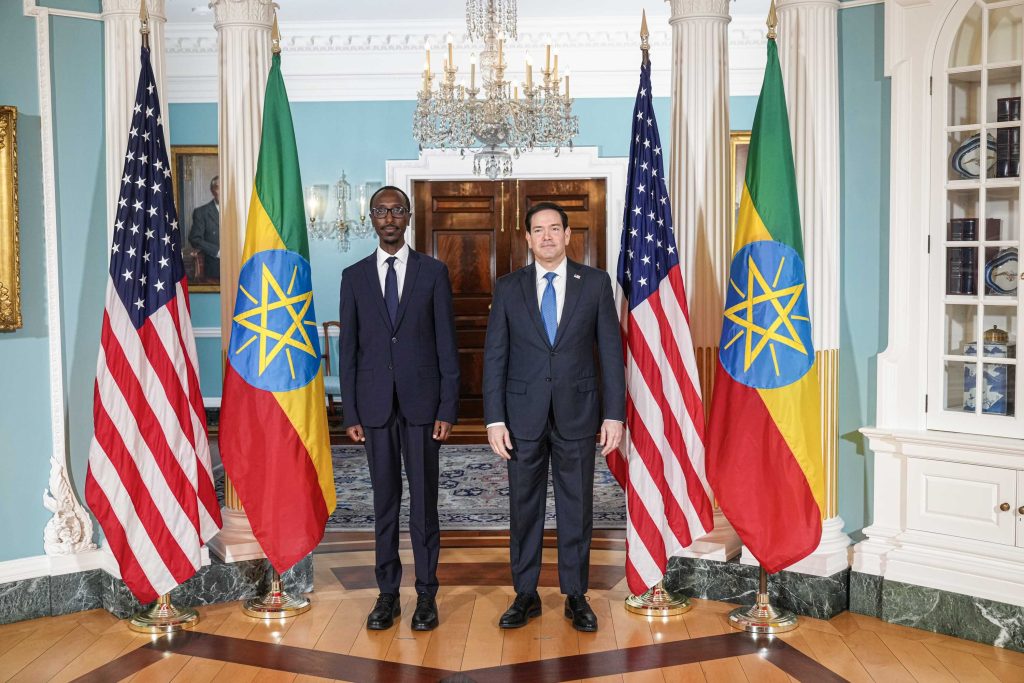
Secretary Rubio commended Ethiopia’s pivotal role in mediating regional conflicts and its contributions to East African security. The discussions centered on transitioning from intermittent diplomatic engagements to a more consistent, structured partnership. Both officials emphasized that a stable Ethiopia is essential for the broader prosperity of the region, signaling a mutual intent to move past recent diplomatic friction toward a more collaborative future.
The newly signed framework prioritizes economic prosperity, trade, and investment as the primary pillars of the renewed relationship. By establishing formal channels for economic dialogue, both nations aim to increase foreign direct investment and expand market access for Ethiopian goods.
This move is seen as an effort to support Ethiopia’s ongoing economic reforms while providing American businesses with clearer pathways into one of Africa’s fastest-growing markets.
Beyond economics, the agreement significantly enhances defense and security cooperation. The two leaders discussed joint efforts to combat terrorism and maintain maritime security in the Red Sea corridor. While focusing on security, the dialogue also touched upon the importance of humanitarian access and internal stability, ensuring that the partnership addresses both external threats and domestic resilience in a balanced manner.
The meeting concluded with a commitment to hold regular follow-up sessions to monitor the progress of the signed agreements.
As both nations navigate complex internal and regional challenges, this diplomatic milestone suggests a pragmatic shift toward institutionalized cooperation. Observers note that the success of this framework will depend on the consistent implementation of the agreed-upon terms and continued high-level engagement between the two capitals.