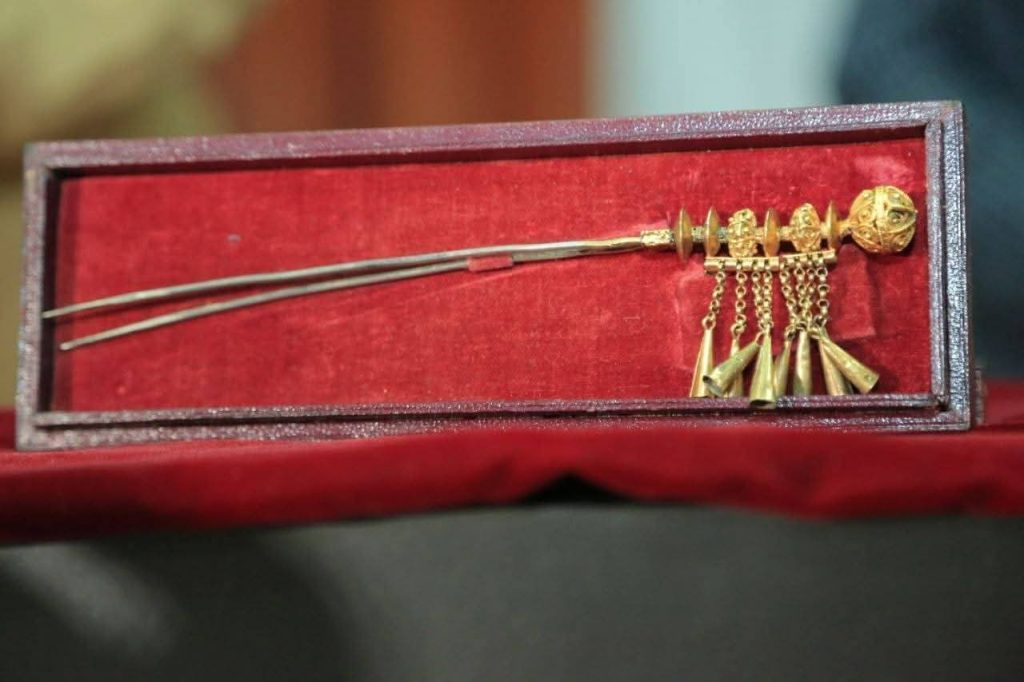
Ethiopia has successfully reclaimed a historic gold hairpin belonging to Empress Tiruwork Wube, the wife of Emperor Tewodros II, ending more than 150 years of the artifact remaining outside the country. The “Woleba” (traditional hair ornament) was looted by British forces following the Battle of Magdala in 1868. Its return marks a significant victory for the nation’s ongoing cultural restitution efforts, restoring a personal relic of one of Ethiopia’s most prominent historical figures to its rightful home.
During the official handover ceremony, Assistant Professor Abebaw Ayalew, Director General of the Ethiopian Heritage Authority, emphasized that the repatriation was the result of a highly coordinated effort. He credited the success to the combined work of the Authority, international friends of Ethiopia, and dedicated citizens. The artifact’s journey back home is seen as a vital step in healing the historical wounds associated with the displacement of Ethiopia’s national treasures during the 19th century.
Key figures played instrumental roles in the negotiations to secure the piece. The Royal Ethiopian Trust, led by His Imperial Highness Prince Ermias Sahle-Selassie, was at the forefront of the mission. Additionally, the expertise of renowned scholar Dr. Alula Pankhurst was crucial in identifying the ornament and advocating for its return. Their collaborative work with international auction houses and private collectors has become a blueprint for how looted heritage can be recovered through diplomatic and historical advocacy.
The Imperial hairpin, which was recently identified at an auction house in Rome, is considered a rare and exquisite example of 19th-century Ethiopian craftsmanship. Historical records suggest the item was taken during the chaotic aftermath of the fall of Magdala, a period when thousands of religious and royal artifacts were seized. Its return is particularly poignant as it belonged to an Empress who faced immense tragedy following the death of her husband and the subsequent exile of her son, Prince Alemayehu.
The Ethiopian Heritage Authority reported that through these sustained efforts, a total of 72 looted artifacts have been successfully repatriated to date. This growing collection includes symbolic items such as the Magdala Shield and various sacred manuscripts. Each returned object is carefully documented and preserved at the National Museum of Ethiopia, where they serve as educational tools and symbols of national pride for current and future generations.
Looking ahead, the Authority has reaffirmed its commitment to pursuing the return of all remaining treasures still held in foreign museums and private collections. Working in close partnership with the Ministry of Foreign Affairs, Ethiopian officials are intensifying their diplomatic reach to ensure that artifacts of high cultural and religious value are returned. The ultimate goal is to consolidate Ethiopia’s dispersed history and ensure that its most sacred relics are accessible to its people.