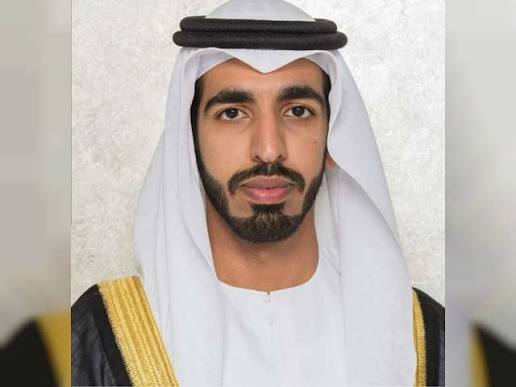
In a powerful demonstration of transcontinental solidarity, His Excellency Sheikh Shakhbout bin Nahyan Al Nahyan, UAE Minister of State, concluded a high-impact mission to the 39th Ordinary Session of the African Union (AU) Summit in Addis Ababa this weekend. Representing the vision of UAE President His Highness Sheikh Mohamed bin Zayed Al Nahyan, the Minister outlined a roadmap for 2026 that positions the UAE not just as a donor, but as the continent’s premier strategic partner in green energy, digital trade, and infrastructure. Amidst discussions with heads of state and senior officials, the message was clear: the UAE’s engagement with Africa is no longer just about aid—it is about a massive, shared investment in a sustainable future.
A Diplomatic Bridge Across the Red Sea
Addressing the summit on February 14, Sheikh Shakhbout emphasized that the UAE’s relationship with Africa is “rooted in decades of trade, maritime links, and people-to-people connections across the Red Sea and Indian Ocean corridors.” This historical connectivity has evolved into a sophisticated diplomatic network, with the UAE now maintaining 19 embassies across Sub-Saharan Africa, with further expansions currently underway. During his bilateral meetings, the Minister conveyed the greetings of the UAE’s top leadership, including His Highness Sheikh Mohammed bin Rashid Al Maktoum and His Highness Sheikh Mansour bin Zayed Al Nahyan, reaffirming their commitment to the AU’s Agenda 2063 and the prosperity of all member states.
The $110 Billion Vote of Confidence
While diplomatic rhetoric often fills summit halls, the UAE backed its words with staggering economic data. Between 2019 and 2023, the UAE committed more than $110 billion in investments across the continent—the highest level by any single country during that period. Of this capital, over $70 billion has been directed toward energy and green sectors, reflecting a long-term assessment that energy access is the foundational pillar for African industrialization and economic diversification. This influx of capital represents a significant portion of the continent’s Foreign Direct Investment (FDI), marking the UAE as an indispensable economic ally in the post-pandemic era.
Powering the Continent: The Green Energy Revolution
The UAE’s renewable energy giants are leading the charge to close Africa’s energy gap. Under the Africa Green Investment Initiative, $4.5 billion has been mobilized for more than 60 projects spanning solar, wind, and green hydrogen. Key highlights discussed at the summit include Masdar’s $10 billion program aiming to deploy 10GW of clean energy capacity, and the Etihad 7 initiative, a flagship project designed to provide renewable electricity to 100 million people by 2035. From the 300MW Aysha 1 Wind Farm in Ethiopia to the Sheikh Mohamed Bin Zayed Solar Plant in Togo, these projects are reducing structural power deficits in real-time.
Redefining Trade: The CEPA Revolution
A core pillar of the UAE’s 2026 strategy is the conclusion of Comprehensive Economic Partnership Agreements (CEPAs). To date, the UAE has concluded nine such agreements with African nations, including Nigeria, Kenya, Angola, and the DRC. These are not standard trade deals; they are modern frameworks that cover digital trade, investment protection, and value chain integration. These agreements are specifically structured to complement the African Continental Free Trade Area (AfCFTA), facilitating cross-border competitiveness and allowing African products easier access to global markets via UAE logistics hubs.
Logistics: Modernizing the Arteries of Trade
To move goods, world-class infrastructure is non-negotiable. The UAE’s logistics giants are currently spearheading some of the largest infrastructure projects on the continent. DP World is executing a $1 billion upgrade of the Dar es Salaam Port in Tanzania, while AD Ports Group has broken ground on a new terminal in Luanda, Angola, significantly increasing container capacity. These assets are viewed as long-term trade-enablers that align perfectly with regional integration ambitions, turning coastal gateways into high-efficiency corridors for landlocked neighbors.
Humanitarian Commitment and Foreign Assistance
The partnership extends beyond commercial interests into deep-rooted humanitarian support. Over the past decade, nearly 40% of the UAE’s total foreign assistance—approximately $20.9 billion—has been directed to African countries. This support covers vital development projects, humanitarian relief, and charitable assistance. On the sidelines of the summit, Sheikh Shakhbout met with numerous African leaders to emphasize that this aid remains a permanent pillar of UAE policy, ensuring that the most vulnerable populations benefit from the burgeoning economic ties between the regions.
Water Security and the 2026 UN Conference
As the summit highlighted “Sustainable Water Availability” as a critical priority, Sheikh Shakhbout drew attention to a major upcoming milestone. In December 2026, the UAE and Senegal will co-host the UN Water Conference in Abu Dhabi. This marks the first time two “Global South” nations will jointly lead this critical global process, underscoring a shared commitment to accelerating progress on water security and sanitation—a central development challenge across the continent that impacts everything from public health to agricultural output.
The Road Ahead: Strategic Empowerment
The UAE’s participation in the 39th AU Summit signals a definitive shift toward “Strategic Empowerment.” By aligning its capital with Africa’s national priorities—renewable energy, digital transformation, and food security—the UAE is betting on the continent’s role as the next global economic engine. As Sheikh Shakhbout concluded, the partnership is built on “trust and mutual respect,” ensuring that the prosperity of the Arabian Peninsula and the African continent remain inextricably linked through 2026 and well into the future.