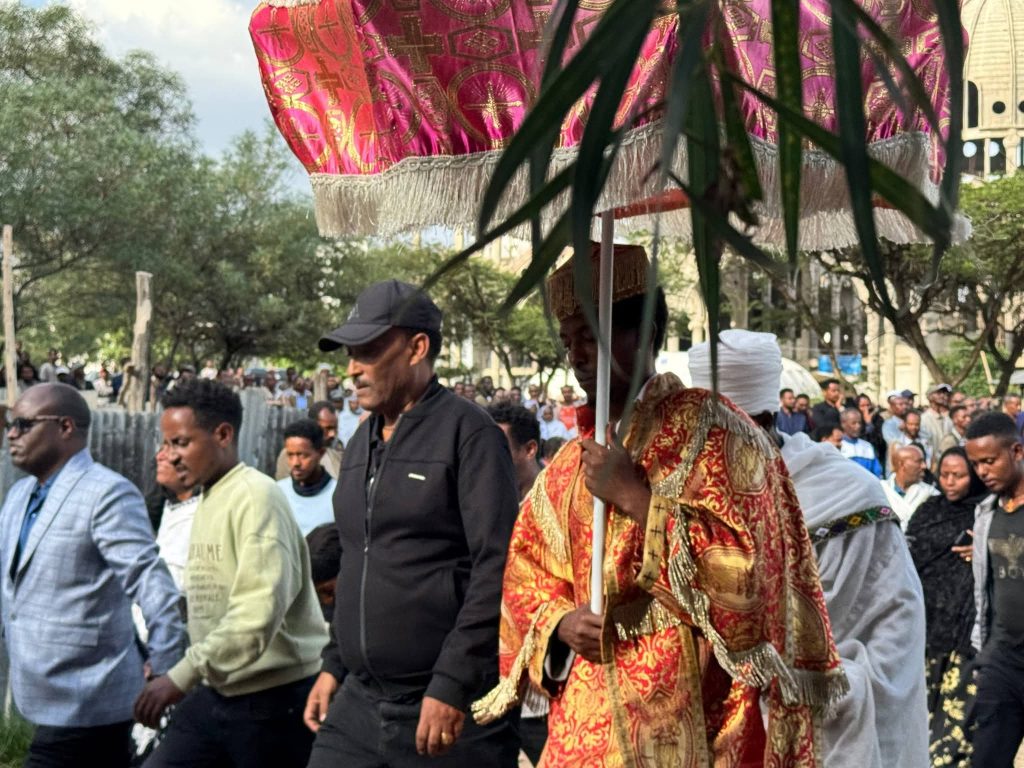
Famous Ethiopian traditional vocalist Semahegn Belew, affectionately known as “Seme Balageru,” was laid to rest today, Tuesday, June 16, 2026, at the Bole Bulbula Debre Medhanit Medhanealem Church in Addis Ababa. The iconic artist passed away suddenly on Monday morning, June 15, 2026, at the age of 58 after experiencing a sudden spell of physical exhaustion while being rushed to the hospital. His unexpected demise has sent shockwaves through the Ethiopian music, theater, and cultural preservation communities, marking the loss of a truly versatile creative pioneer.
Semahegn gained monumental nationwide fame by transforming the word “Balageru” (countryman/farmer) from a derogatory urban term associated with backwardness into a powerful symbol of national pride. Born on September 27, 1967, in the scenic city of Bahir Dar, he launched his four-decade-long artistic career at the tender age of 14 before moving to Addis Ababa in 1990. He revolutionized the music scene by blending traditional Gojjam rhythms like Bati and Ambassel with contemporary modern beats, performing worldwide in distinct traditional farming attire to proudly showcase rural Ethiopian heritage.

Beyond his iconic hits such as Antuyewa, Wuba Bahir Dar, and Debot Ensra, Semahegn was celebrated for his unparalleled stage presence, mesmerizing audiences with a signature radiant smile and a vocal power strong enough to fill arenas without a microphone. He was also deeply revered as a man of profound integrity; notably in 1999, upon learning of a four-year legal sentence passed against him regarding a car accident, he chose to fly back from a professional tour in the United States to surrender directly to police at Bole International Airport, setting a historic example of respect for the rule of law.
In his personal and social life, the beloved singer was known as a devoted family man, a generous philanthropist, and an active community pillar who heavily supported elderly care associations, regional patriotic initiatives, and the Grand Ethiopian Renaissance Dam (GERD). He had been married to Woyzero Gebeyanesh Abate since 1990, raising four accomplished sons—Engineer Biniyam, Architect Israel, Engineer Abraham, and Abel—and happily living to see his four grandchildren. Shortly before his passing, he had also released a powerful patriotic single titled Tewodros, dedicated to the historic Ethiopian emperor.
The final funeral procession was attended by family members, prominent figures from the arts community, and thousands of grieving fans paying tribute to a man who explicitly prioritized his country, his marriage, and his craft. His monumental contributions to Ethiopian cultural identity, coupled with his legacy of humility and community service, will continue to inspire generations of artists across the nation.