The Ethiopian National Dialogue Commission has officially released eight major agenda items that will serve as the foundation for its upcoming national dialogue summit scheduled to begin on July 14. This announcement follows an extensive four-year public consultation process designed to gather diverse perspectives from citizens across the country and the diaspora.
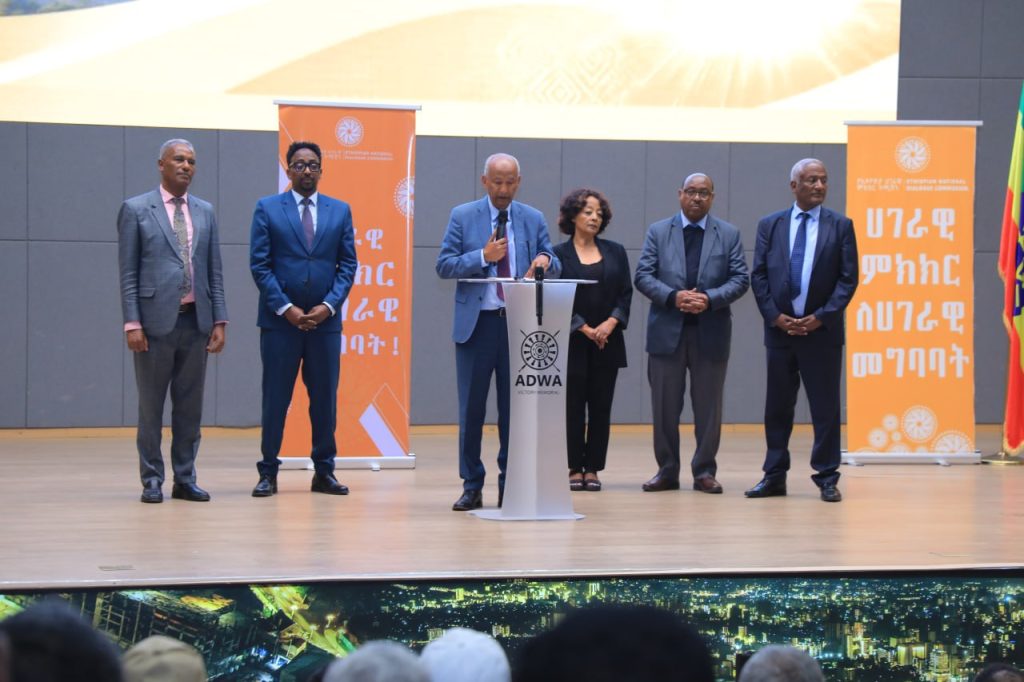
Commission Chairperson Professor Mesfin Araya disclosed the core agendas during a press briefing held at the Adwa Victory Memorial Museum. He confirmed that the pillars reflect compiled points of contention and potential solutions gathered from over 200,000 citizens, political parties, and civil society organizations nationwide.
The first core pillar focuses on nation-building, aiming to address long-standing historical grievances within Ethiopia. This agenda incorporates debates surrounding historical narratives, identity questions, shared national values, and language policies, with the ultimate objective of fostering consensus on a mutually acceptable national framework.
State structure and the constitutional system constitute the second major agenda item, which is anticipated to draw significant debate. Key discussion points under this pillar include the future of Article 39 regarding self-determination, the division of power and fiscal federalism between federal and regional governments, electoral systems, and potential constitutional amendments.
The third agenda tackles the legal status and administrative boundaries of the federal cities, Addis Ababa and Dire Dawa. Specifically, the consultations will address Addis Ababa’s administrative relationship with the Oromia region, its naming, official working language, and territorial boundaries, alongside Dire Dawa’s future administrative ties with the neighboring Oromia and Somali regions.
Religious freedom and institutional relations represent the fourth agenda, emphasizing the principles of secularism and state-religion separation. The talks will focus on ensuring equal rights and freedom of worship for all faiths, alongside developing permanent institutional mechanisms to resolve inter-faith disputes through peaceful dialogue.
The fifth and sixth pillars cover institutional governance and socioeconomic reforms respectively. Discussions will center on ensuring the political neutrality of democratic and security institutions—such as courts, the electoral board, the military, and the police—while separately addressing protracted economic issues including land ownership rights, resource distribution, and inflation management.
The final two agendas prioritize anti-corruption measures and comprehensive peacebuilding strategies. The commission has outlined frameworks to establish robust mechanisms against corruption, implement transitional justice to acknowledge historical injustices, and formulate structured pathways to transition armed groups into peaceful political participants to secure sustainable national stability.