Prime Minister Abiy Ahmed has announced a landmark legislative shift aimed at dismantling the financial bottlenecks stifling Ethiopia’s manufacturing sector. Speaking at the 4th “Ethiopia Tamrt” Expo, the Prime Minister revealed that a new law, expected within a month, will mandate both private and state-owned banks to allocate a specific percentage of their lending portfolios to industrial growth.
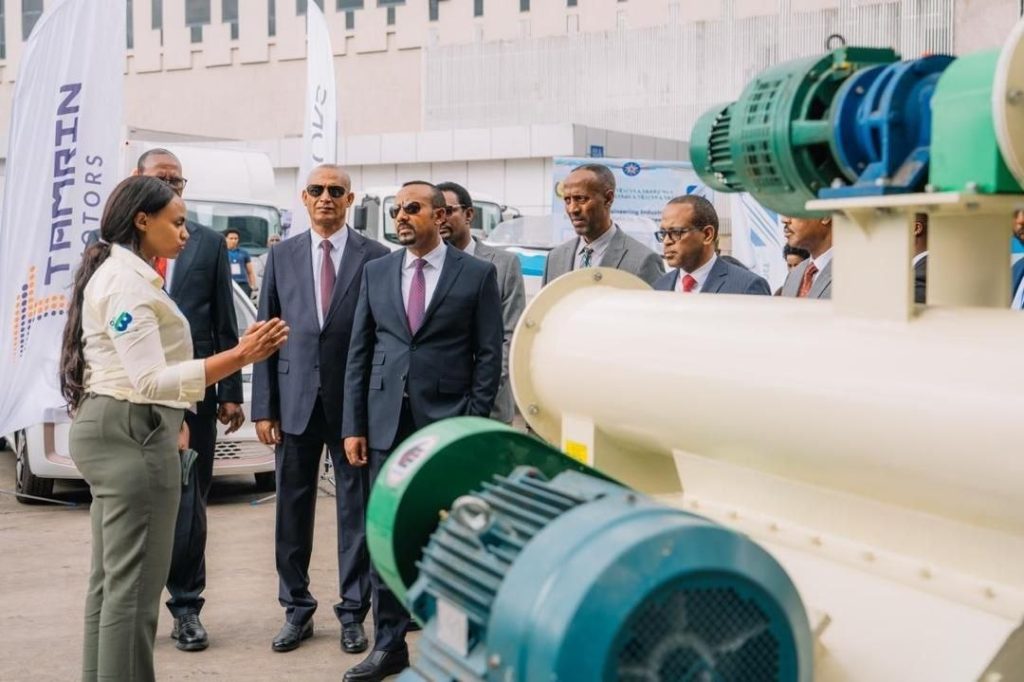
The Prime Minister characterized the move as a transition from a trade-heavy economy to one rooted in domestic production. He argued that capital is currently “trapped” in short-term commercial activities and contraband trade. To Abiy, industrialization is a matter of national sovereignty, asserting that Ethiopia cannot remain truly independent while relying on foreign aid for essentials.
The government’s “Ethiopia Tamrt” (Ethiopia Produces) initiative has already reported significant milestones over the last four years:
- Forex Savings: $14.5 billion saved via import substitution.
- Industrial Revival: 993 formerly defunct factories are back in operation.
- New Investment: Over 3,600 new investors have entered the sector.
- Defense Exports: Ethiopia now exports military hardware to six African nations.
Despite the “great herald” of guaranteed credit, the Prime Minister offered a reality check: Ethiopia’s total national wealth is still insufficient to meet the massive capital demands of modern industry, necessitating aggressive wealth creation.
Economists also warn of potential friction. Forcing banks to prioritize long-term industrial loans over fast-turning trade credit could strain liquidity and increase default risks. Furthermore, experts argue that for the law to succeed, the government must address non-financial hurdles, including bureaucratic corruption, high logistics costs, and the frequent power outages that continue to hamper global competitiveness.