In a major diplomatic breakthrough, a broad coalition of Sudanese political and civil forces has successfully reached a consensus on a shared roadmap to launch a comprehensive peace process aimed at ending the nation’s devastating internal war. Announcing the accord following intense multi-day consultative meetings in Addis Ababa, on Friday, participants described the agreement as the most significant alignment of Sudanese political actors since the country’s deep political crisis began in 2021. The consensus was formally facilitated by the international Quintet mechanism—a high-level mediation body comprising the United Nations (UN), the African Union (AU), the European Union (EU), the League of Arab States, and the Intergovernmental Authority on Development (IGAD)—which succeeded in bringing fractured factions to the negotiating table.
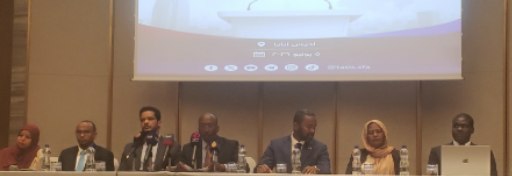
The primary objective of the newly endorsed framework is to establish an institutional bridge toward a permanent settlement by creating a joint preparatory committee. This committee will be officially tasked with structuring a Sudanese-led political process, defining the rules of engagement, and mapping out subsequent national peace tracks. Major groups endorsing the roadmap include the Sumoud Alliance, a participating faction of the Democratic Bloc, the Arab Socialist Ba’ath Party-Original, the Popular Congress Party, and the National Umma Party, alongside an expansive network of civil society networks, youth associations, and women’s rights organizations. The signatories also engaged directly with the Sudan Founding Alliance (TASSIS), a major coalition representing civilian, armed, and traditional administrative groups that reiterated its stance that no sustainable stability can be achieved in Sudan without its full, mandated inclusion.
According to a joint statement issued by the endorsing groups, the hard-won consensus reflects a renewed collective willingness among Sudan’s fragmented political and civil spheres to cooperate in alleviating the severe human suffering caused by the conflict that erupted in April 2023. Beyond organizing a transitional framework, the signatories committed to using the upcoming political track to combat escalating hate speech and racism, foster inclusive national dialogue, and systematically repair the deep social fractures exacerbated by years of warfare. The ultimate goal of the proposed political process, as outlined in the document, is to guide the country toward comprehensive social reconciliation and the formulation of a entirely new social contract founded on the core tenets of social justice, equality, and equal citizenship.
A central element of the political visions discussed during the Addis Ababa talks involves the structural transformation of the Sudanese state, with several key factions advocating for fundamental overhauls over minor institutional reforms. Coalition representatives emphasized the necessity of addressing historical grievances tied to systemic marginalization, widespread poverty, and uneven regional development through an inclusive economic model. Furthermore, a foundational pillar of the ongoing dialogue emphasizes the absolute necessity of reforming the security apparatus, with prominent participants calling for the establishment of a completely new national army, a modernized national intelligence agency, and an impartial police force. Proponents argue that a thorough restructuring of the security sector is an indispensable prerequisite to guarantee a durable peace, safeguard international human rights standards, and enable the peaceful establishment of a decentralized, secular, and democratic state.
Despite the historic nature of the gathering, the consensus was not entirely universal, highlighting the persistent challenges surrounding political inclusion and institutional legitimacy in Sudan. The Sudan Liberation Army (SLA), led by Abdelwahid al-Nur, officially declined to sign the joint vision, citing deep disagreements regarding the political exclusion of the former ruling National Congress Party (NCP) and the broader Islamist movement. The SLA noted that the participating faction of the Democratic Bloc refused to adopt explicit language barring these former regime elements from the transitional arrangements, prompting the movement to withhold its signature. This ideological division, paired with a prior boycott by a separate faction of the Democratic Bloc over procedural arrangements and the participation of TASSIS, underscores the complex landscape the Quintet mechanism must navigate as it prepares for a second round of structural negotiations scheduled for July.