Ethiopia today commemorated the 130th anniversary of the Victory of Adwa. The central ceremony took place at Emperor Menelik II Square and the Adwa Victory Memorial in Addis Ababa, where President Taye Atske Selassie led the nation in honoring the legendary triumph. Accompanied by high-ranking government officials, the President laid a wreath at the foot of the statue of Emperor Menelik II, signaling the start of a nationwide celebration themed “From a Proud History to a Bright Horizon.”
The wreath-laying ceremony was attended by a distinguished assembly of Ethiopian leadership, including Field Marshal Birhanu Jula, Chief of Staff of the Armed Forces, and Defense Minister Aisha Mohammed. Other key figures present were Tagesse Chafo, Speaker of the House of Peoples’ Representatives, and Agnehu Teshager, Speaker of the House of Federation. They were joined by Addis Ababa Mayor Adanech Abebe and Lij Daniel Jote, President of the Ancient Ethiopian Patriots’ Association, alongside federal police commissioners and former presidents, all gathered to pay tribute to the heroes who preserved Ethiopia’s sovereignty.
In a powerful social media address to the nation, the Prime Minister extended his congratulations, defining the victory as a testament to Ethiopia’s unyielding national interest, freedom, and sovereignty. He emphasized that the triumph in 1896 was not merely a military feat against the Italian colonial army, but a victory over internal betrayal. He noted that despite differences in culture and faith, the ancestors stood united for a single cause. He defined true patriotism as the willingness to sacrifice personal interests for the dignity and honor of the motherland.
The Prime Minister urged the current generation to replicate the spirit of Adwa in modern sectors such as agriculture, industry, tourism, and the digital economy. He underscored that a nation is built through firm capability and unwavering stance, expressing his hope that through the diligent efforts of its children, Ethiopia will remain respected and sovereign forever. This call to action aims to transform historical pride into tangible economic and social progress for all citizens.
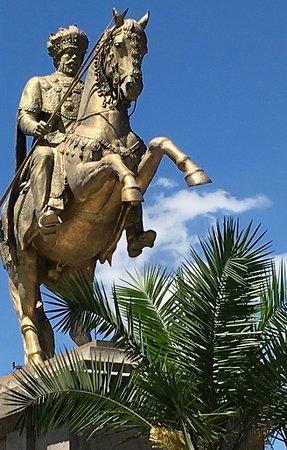
Joining the commemorations, the Chairperson of the African Union Commission, Mahmoud Ali Youssouf, hailed the Victory of Adwa as a “beacon of freedom” and a source of collective pride for the entire continent. In an official statement, he asserted that the victory proved Africans could break the shackles of colonialism and determine their own destiny. He described Adwa as a foundational milestone for the African Union’s “Agenda 2063” and the overarching vision of a “United Africa,” symbolizing African sovereignty, dignity, and unity.
Chairperson Youssouf further emphasized that the spirit of resilience shown at Adwa is essential for overcoming contemporary challenges facing the continent today. He noted that the victory provides significant moral ground for the AU’s efforts in 2025, which has been designated as the “Year of Reparations” to seek justice for past historical wrongs. He reaffirmed the Commission’s commitment to fostering peace, accelerating economic integration, and ensuring shared prosperity across Africa.
Throughout the capital, residents joined elderly patriots to recount the stories of the brave men and women who fought on the front lines 130 years ago. The atmosphere in Addis Ababa was one of deep reflection and celebration, as the sacrifice of those who fell at the Battle of Adwa was recognized as the bedrock of modern Ethiopian identity. The presence of the Ancient Ethiopian Patriots’ Association served as a living link to the past, reminding the youth of the heavy price paid for the independence they enjoy today.
As the day concluded, the message across the nation remained clear: Adwa is not just a historical event, but a living philosophy of resistance and self-reliance. From the diplomatic corridors of the African Union to the streets of Addis Ababa, the 130th anniversary reinforced Ethiopia’s role as a symbol of anti-colonial struggle. The government and international partners alike emphasized that the unity displayed in 1896 remains the most potent tool for addressing the country’s and the continent’s future aspirations.