As the 2025 Africa Cup of Nations (AFCON) unfolds, the most significant victory hasn’t occurred in the penalty box, but in the very soil beneath the players’ feet. In a season defined by unpredictable and often violent weather patterns, Morocco has successfully debuted a multi-million dollar “invisible shield”—the SubAir Sport System. This engineering marvel has ensured that even as torrential rains paralyzed surrounding urban centers and flooded major roadways, the tournament’s schedule remained untouched.
The Prince Moulay Abdellah Stadium in Rabat has become the flagship for this transition, proving that high-stakes football no longer has to be at the mercy of the clouds.
The severity of the weather during the opening weeks of the tournament cannot be overstated. While flash floods devastated local infrastructure in cities like Safi, the tournament’s primary venues faced a record-breaking 46mm of rainfall within a single 24-hour period.
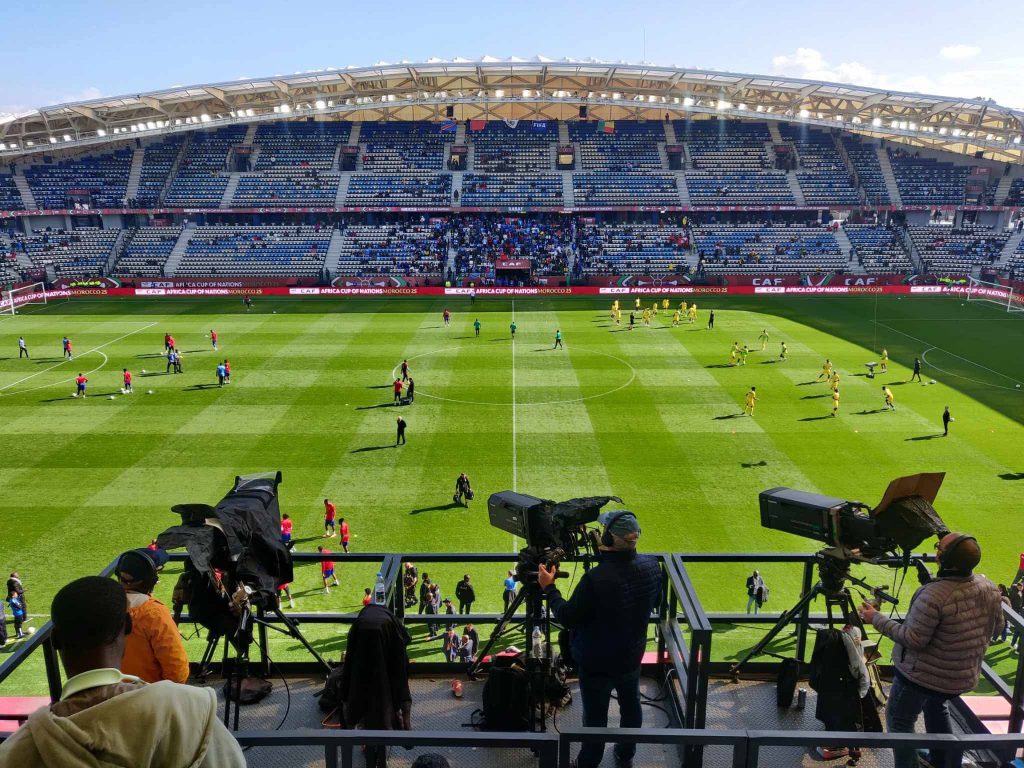
Traditionally, such a downpour would result in “micro-pooling,” where the ball stops dead in puddles, or worse, the total abandonment of matches due to player safety concerns. Instead, observers and broadcasters were stunned to see the ball moving with lightning speed across the turf. This “rain-proof miracle” is the result of Morocco’s $15 billion infrastructure surge, signaling the country’s intent to dominate the global sports landscape as it prepares for the 2030 FIFA World Cup.
At the heart of this technological triumph is a move away from passive, gravity-fed drainage to an active environmental management system. Standard pitches rely on water slowly trickling through layers of silt and gravel, but Morocco’s new surfaces are integrated with a massive network of perforated pipes connected to industrial suction units. When moisture sensors embedded in the rootzone detect saturation, the system engages its “Vacuum Mode.” This powerful suction pulls water down through the grass 36 times faster than natural drainage.

Capable of moving over 10,000 liters of water every minute, the technology ensures that the playing surface remains firm and stable regardless of the intensity of the storm above.
Beyond simple water extraction, the system offers a level of biological control never before seen in African football. By reversing the airflow, the system enters “Pressure Mode,” a process known as oxygenation. This allows groundskeepers to pump fresh, oxygen-rich air directly into the rootzone from below. This is critical for preventing “black layer” and root rot—diseases that typically kill high-performance turf in humid or oversaturated conditions.
Furthermore, Moroccan engineers utilized industrial-scale thermodynamics to combat “thermal shock” from winter rains. By pushing 28,000 cubic feet of heated air per minute through the subsurface pipes, they can spike soil temperatures by nearly 30°F, forcing the grass to stay in a state of active growth even during the coldest night matches.
The physical durability of the pitch has also been reinforced through a Biomechanical Hybrid lattice.
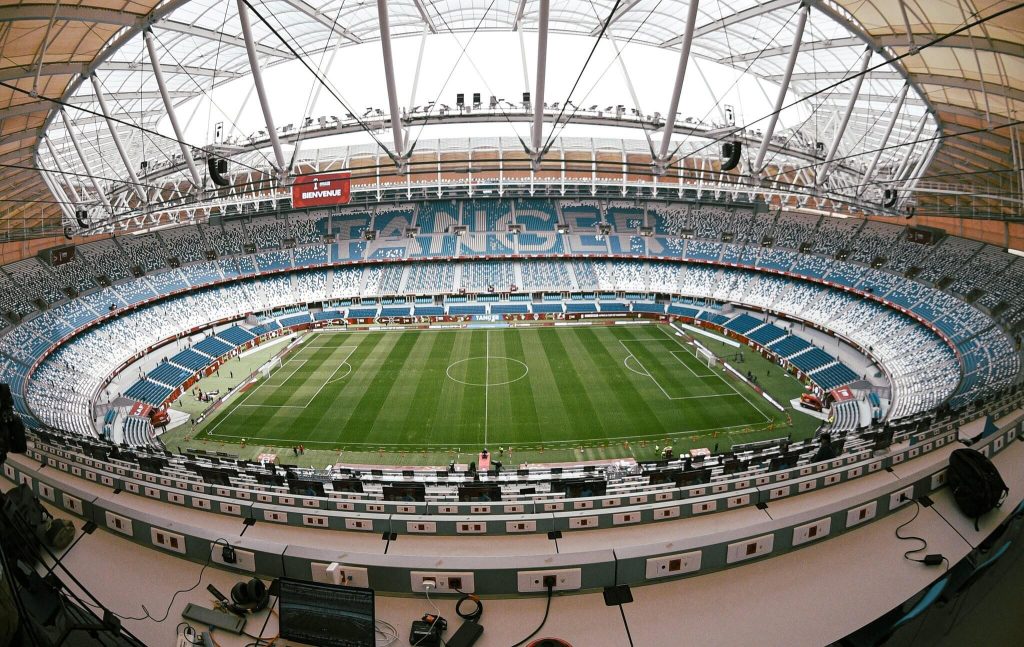
The natural turf is interspersed with over 20 million synthetic polyethylene fibers stitched 20cm deep into the ground. This creates a structural reinforcement similar to rebar in concrete, preventing the deep divots and “scarring” that usually occur when players make high-torque turns or sliding tackles on wet grass. This hybrid approach, combined with a “Smart” Rootzone of USGA-spec silica sand, creates a sponge-like effect that can swallow over 12 inches of rain per hour. This ensures that the pitch remains perfectly flat and safe, protecting the health of elite athletes whose careers depend on a predictable playing surface.
As AFCON 2025 reaches its final stages, the “Morocco Model” has officially established a new global benchmark for sports infrastructure.
The investment in the Prince Moulay Abdellah Stadium—now a 68,700-seat, football-specific arena—is a clear message to the world that Morocco is ready for the highest level of international competition. By moving from a defensive posture of reacting to the weather to an active posture of controlling the environment, Morocco has protected the integrity of the game and the value of global broadcasting rights.
For the future of the sport, this tournament has proven that the referee’s whistle is now the only force truly capable of stopping a match.