Voting in Ethiopia’s seventh general election officially commenced on Monday, with over 50.5 million registered citizens eligible to cast their ballots amid varying regional security and administrative conditions. The National Election Board of Ethiopia (NEBE) reported that more than 11,000 candidates from 47 political parties are contesting seats for regional councils and the 547-seat House of Peoples’ Representatives. Prime Minister Abiy Ahmed cast his ballot in his birthplace of Beshasha, located in the Oromia region, as his ruling Prosperity Party seeks to secure a renewed five-year mandate to form the next government.
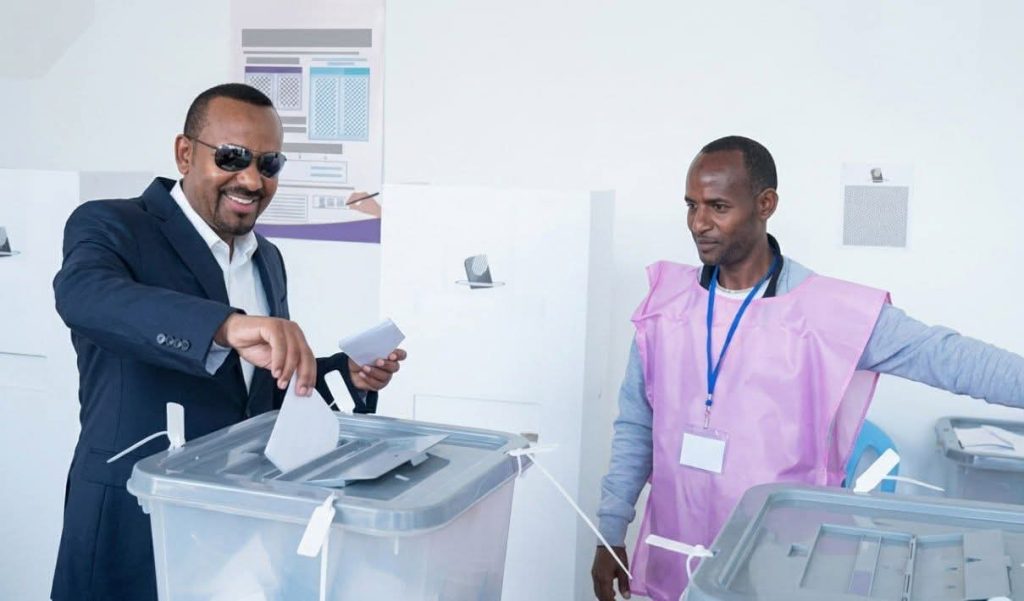
State-affiliated media outlets reported a largely peaceful start to the voting process across most parts of the country after polling stations opened at 6:00 a.m. voters heading to the estimated 52,000 polling stations, with state television broadcasting images of diverse demographics, including elderly, nursing mothers, and hospitalized citizens, turning out to vote.
This election cycle featured major technological updates, including the rollout of a digital voter registration platform called “Mirchaye” (My Election), which allowed more than 5.5 million citizens to register digitally, while advanced Geographic Information System (GIS) mapping was introduced to manage polling logistics.
However, significant security and administrative challenges prevented polling from taking place uniformly nationwide. Voting has been deferred or severely disrupted in several areas—including parts of the northern Tigray region and multiple constituencies in the Amhara region—due to ongoing conflict, civil unrest, and security concerns. While NEBE officials finalized specialized mechanisms to provide tailored voting access for internally displaced persons (IDPs), military personnel, and students, regional armed groups like the Fano militia in Amhara had previously issued warnings against participating, prompting tight security deployments and national command posts to monitor public safety.
The political landscape surrounding the vote has drawn mixed assessments from local and international stakeholders. According to reports by the Associated Press, several opposition factions raised formal concerns regarding a shrinking political space, alleging that state restrictions, complex digital candidate registration requirements, and regional instability prevented them from actively campaigning outside the capital or effectively engaging voters. Concurrently, human rights organizations expressed concern over civic space, pointing out instances where independent journalists and defenders faced systematic pressures ahead of the polls.
To ensure transparency, the NEBE accredited domestic civil society organizations and concluded a series of nationwide political party debates before the mandatory pre-election silence period. At the international level, election observation missions from the African Union (AU) and the Intergovernmental Authority on Development (IGAD) are actively monitoring the process across accessible districts. Official preliminary findings from the continental observer teams are expected to be released in Addis Ababa later this week as ballot counting begins.