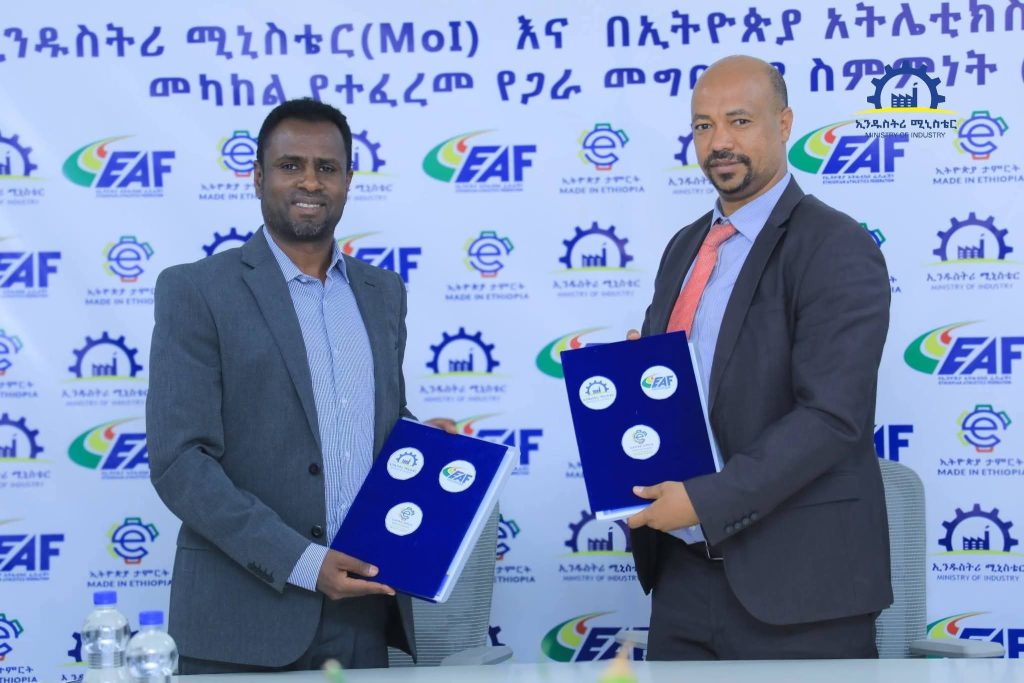
The Federal Ministry of Industry and the Ethiopian Athletics Federation have officially entered a high-stakes partnership, signing a Memorandum of Understanding (MoU) that seeks to marry the country’s world-renowned running prowess with its burgeoning manufacturing sector. This agreement isn’t just a sports deal; it is a calculated economic maneuver designed to transform the “Ethiopia Tamrit” (Let Ethiopia Produce) movement into a globally recognized brand. By leveraging the physical endurance of the nation’s heroes, Ethiopia is signaling its readiness to compete in the cutthroat arena of global trade.
Central to this agreement is the commitment to elevate the “Ethiopia Tamrit” race to international technical standards. The Federation will implement rigorous protocols, ensuring that course measurements, timing, and anti-doping measures align with World Athletics requirements. This ensures that any world records or elite times clocked during the event carry official weight, drawing the eyes of the international sporting community and media to a platform that is simultaneously showcasing “Made in Ethiopia” goods.
The strategic brilliance of this union lies in “Brand Ethiopia.” While the nation has historically struggled with a trade deficit, its athletics brand remains a gold standard of excellence and reliability. By having elite athletes compete in locally manufactured apparel and footwear, the government is using the track as a high-performance laboratory. If an Ethiopian champion can conquer a marathon in a home-grown kit, it serves as a powerful, silent testimonial to the quality and durability of the country’s textile and leather industries.
Beyond branding, the MoU opens a vital gateway for local clubs and emerging talents to gain international exposure. By inviting world-class foreign athletes to participate, the race becomes a melting pot of experience. This “athletic diplomacy” allows young Ethiopian runners to test their mettle against the world’s best on home soil, while simultaneously exposing international visitors to the investment opportunities and industrial potential currently brewing within the country’s special economic zones.
The fourth installment of this ambitious event is now officially set for April 26, 2026, at the iconic Meskel Square in Addis Ababa. Under the rallying cry “Ethiopia Tamrit for Universal Sovereignty,” the race is expected to be more than a display of speed; it will be a demonstration of national self-reliance. The theme underscores the government’s philosophy that true sovereignty is not just political but economic, achieved when a nation can feed, clothe, and equip itself through its own labor.
However, the road to industrial sovereignty requires more than just a single day of racing. To achieve lasting impact, the Ministry is pushing for permanent commercial linkages between factories and the sporting world. This means moving toward a future where every athletic club in the country is kitted by local brands rather than expensive imports. This shift toward Economic Patriotism is essential for saving foreign currency and stimulating the domestic job market in the garment and footwear sectors.
Looking at global success stories, Ethiopia is essentially adopting the “German Model” of industrial-sporting synergy. In Germany, the success of the national football team and Olympic athletes is inextricably linked to corporate giants like Adidas, Mercedes, and Siemens. These companies use sports as a global exhibition of German engineering and precision. Ethiopia is now embarking on a similar path, aiming to prove that Ethiopian industrial products possess the same “endurance” and “speed” as its legendary long-distance runners.
The technical hurdles remain significant, particularly regarding the accreditation process with international bodies. Ensuring that the infrastructure—from the quality of the asphalt to the digital precision of the finish line—meets global expectations is a massive undertaking for the Ministry of Industry. Yet, the potential payoff is immense; a successful, internationally certified race could attract multi-million dollar sponsorships, turning a government-led movement into a self-sustaining economic engine.
Ultimately, this MoU represents a shift from traditional aid-dependency toward a “trade-not-aid” mindset. By placing the “Made in Ethiopia” logo on the chests of the world’s fastest humans, the nation is rewriting its narrative. The success of this initiative will be measured not just by the medals won at Meskel Square, but by the number of Ethiopian-made products that find their way onto shelves in London, New York, and Tokyo.