For three days, the Angolan Stock Exchange sent representatives to the Ethiopian market in an effort to create a centre for domestic trade in agricultural products.
Members of the product market management gave them instruction on law enforcement, warehouse, quality and marketing operations, market and warehouse security monitoring, payment and delivery, and market information distribution while they were at the Ethiopian Commodity Exchange Academy from December 11–13, 2023.
They also visited the Central Laboratory & Electronic Marketing Centre and the Addis Ababa branch warehouse of the main office to obtain practical skills.
To ensure appropriate export and local market practices and to increase market efficiency, Ethiopia needs to establish a commodities exchange. To facilitate the trading of standardised commodities contracts and associated investment products, the exchange creates and implements procedures and policies. Behailu Nigussie, the deputy CEO of Ethiopia Commodities Exchange, stated as much at the beginning of the training.
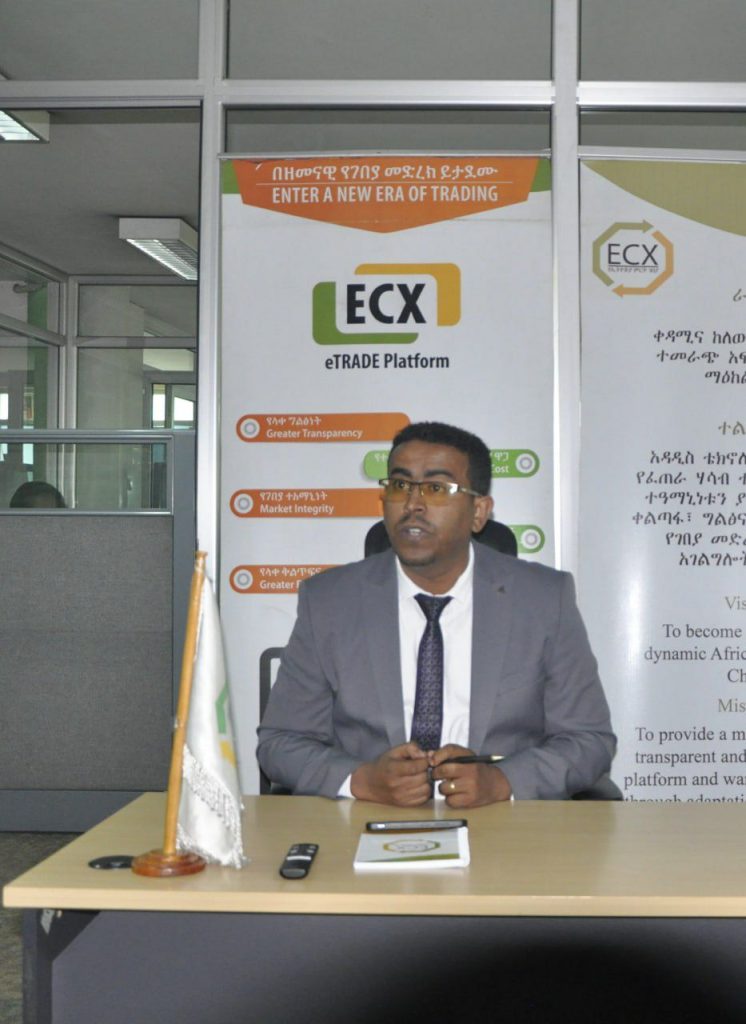
” ECX established an Academy to train traders and value chain players on a variety of subjects and share its experience and proficiency in the commodity market model with other African countries, with the goal of becoming a centre of excellence in the industry. We have so far provided training and exposure tours to delegations from a number of countries, including Tanzania, Ghana, Malawi, Nigeria, and Mozambique. We most recently had a Kenyan team stay with us. We are quite proud of the countries that have successfully implemented full-fledged operations and established creative commodity exchange ecosystems within the framework of their own countries by learning from our vast experience, including successes and mistakes”
He added that Ethiopian market has grown to the point where it is sharing knowledge and experience, as well as the technology, legal framework, and experience gained from the last sixteen years in building a contemporary trading system.
Angolan Stock Exchange representatives attended the current session and said they would like to send a few professionals to provide them in-depth training.

They asserted that this kind of cooperation will be advantageous for the development of a modern, international trade system as well as the integration of African product marketplaces. The recently signed African Continental Free Market Agreement and bilateral regional economic cooperation agreements between countries facilitate the integration of the product markets.